Pei-Chi & Rodney | Jun 18

Cycling Aquasoil Based Aquarium Using APT Balance – Our Trial Results

One of the characteristics of fresh APT Feast Aquasoil is that it releases a significant amount of ammonia when first submerged. In our test setup, 15 litres of APT Feast in a 125-litre aquarium produced an ammonia reading of around 20 ppm.


The combination of high ammonia, acidic water and very low carbonate hardness (kH) can make establishing the nitrogen cycle more challenging than in a typical aquarium. Beneficial nitrifying bacteria generally perform best in water with a higher pH and adequate carbonate hardness, so we wanted to see how APT Balance would perform under these conditions.

Our Previous Experience

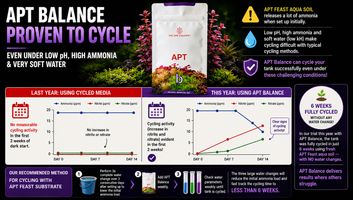
Last year, we cycled tanks containing fresh APT Feast using established filter media. During the first two weeks of a dark-start setup, we observed no measurable cycling activity, with no significant increase in either nitrite or nitrate.


This Year's Trial with APT Balance

This year we repeated the trial, replacing the cycled media with APT Balance.


Within the first two weeks of dark start we observed measurable increases in both nitrite and nitrate, indicating that the nitrogen cycle was becoming established despite the low pH and very low kH created by the aquasoil.


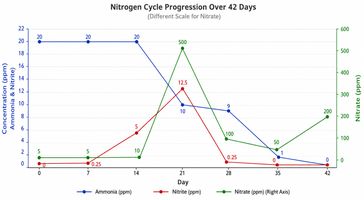
The aquarium reached 0 ppm ammonia and 0 ppm nitrite after six weeks, completing the nitrogen cycle without any water changes during the trial.


While this is only one trial, the results suggest that APT Balance is capable of establishing biological filtration even under conditions that are often considered challenging for conventional cycling methods.

Water parameter data over six weeks under dark start condition.

Our Recommended Cycling Method

Based on our experience, this is the method we would use when setting up a tank with APT Feast:


Set up the aquarium with APT Feast aquasoil and fill it with water.


Perform a 100% water change once a day for three consecutive days to reduce the initial ammonia released by the substrate.


Dose APT Balance weekly according to the manufacturer's instructions.


Test ammonia, nitrite and nitrate weekly until the tank is fully cycled.


Those initial water changes significantly reduce the ammonia load, which should help shorten the overall cycling time. Based on our observations, this approach has the potential to reduce cycling time to less than six weeks.

Planting and Adding Fish

Many aquarium plants can tolerate low ammonia concentrations (around 1 ppm) without noticeable issues. We have found it is generally safe to plant from day one if daily water changes are being performed, or once ammonia has fallen to around 1 ppm.


For fish, however, we recommend waiting until both ammonia and nitrite test at 0 ppm before introducing livestock.

Final Thoughts

This trial was another enjoyable experiment for us. We're aquarium hobbyists who enjoy testing products and sharing what we learn along the way.


We hope you found these results useful. Hopefully this will help you reduce the cycling time for your next set up with aqua soil.

Let's Create Thriving Aquariums—Together

Pei-Chi & Rodney

More Posts

<p>Potassium Permanganate Baths – How We Use Them</p><p>Potassium Permanganate Baths – How We Use Them</p>

Potassium Permanganate Baths – How We Use Them

Potassium permanganate (PP) has been used in the aquarium hobby for decades as an external treatment for parasites, bacteria and fungi. It is a valuable treatment when used correctly, but it is not something to use casually. Good preparation, accurate dosing, excellent water quality and constant observation are all essential for safe treatment


The method below is simply how we use PP at Fintastic Studio. It is not the only method available, nor is it intended to replace veterinary advice. Always research thoroughly before using PP and never leave fish unattended during treatment.


*Potassium permanganate can be purchased from King's plant barn under - Wallys Potassium Permanganate.
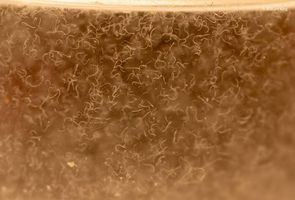
<p>Vinegar Eel Culture Instruction</p><p>Vinegar Eel Culture Instruction</p>

Vinegar Eel Culture Instruction

Vinegar eels are one of the easiest live foods to culture and are an excellent first food for small fish fry. They remain alive in freshwater for many hours, giving fry plenty of time to feed.

There are two different methods you can use to culture them. The traditional method is very reliable and requires minimal maintenance, while the High Density Vinegar Eel (HDVE) method produces much larger quantities but requires a little more care.

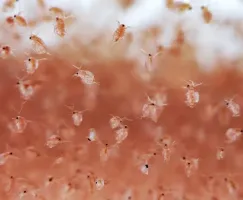
Daphnia Culture InstructionDaphnia Culture Instruction
Daphnia Culture Instruction

Daphnia are small freshwater crustaceans that make an excellent live food for aquarium fish. They are highly nutritious and are especially useful for conditioning breeding fish and feeding growing fry.

There are many different methods for culturing daphnia. The following is the method that has given us the most consistent results after plenty of trial and error.

Microworm Culture InstructionMicroworm Culture Instruction
Microworm Culture Instruction

Microworms are an excellent first food for newly hatched fish fry. They are easy to culture at home and, with a little care, will provide a continuous supply of live food.

Fintastic Studio Beef Heart RecipeFintastic Studio Beef Heart Recipe
Fintastic Studio Beef Heart Recipe

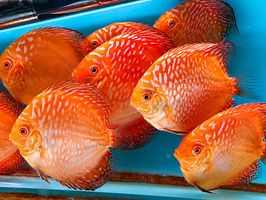
Our homemade beef heart mix has been a staple food for growing discus and other carnivorous tropical fish. This recipe combines lean beef heart with quality fish foods and nutritional supplements to produce a highly palatable, protein-rich food that freezes well and is easy to portion.

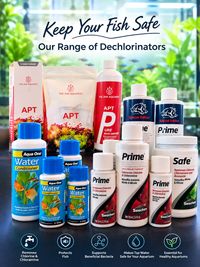
Which Dechlorinator Should You Choose? Which Dechlorinator Should You Choose?
Which Dechlorinator Should You Choose?

If you use tap water for your aquarium, a good dechlorinator is one of the most important products you'll ever buy. Every water change introduces chlorine or chloramine, and failing to remove them can quickly harm the beneficial bacteria in your filter as well as your fish.


One of the questions we get asked most at Fintastic Studio is:

"Which dechlorinator is the best?"


The answer is... it depends on your aquarium and your needs.