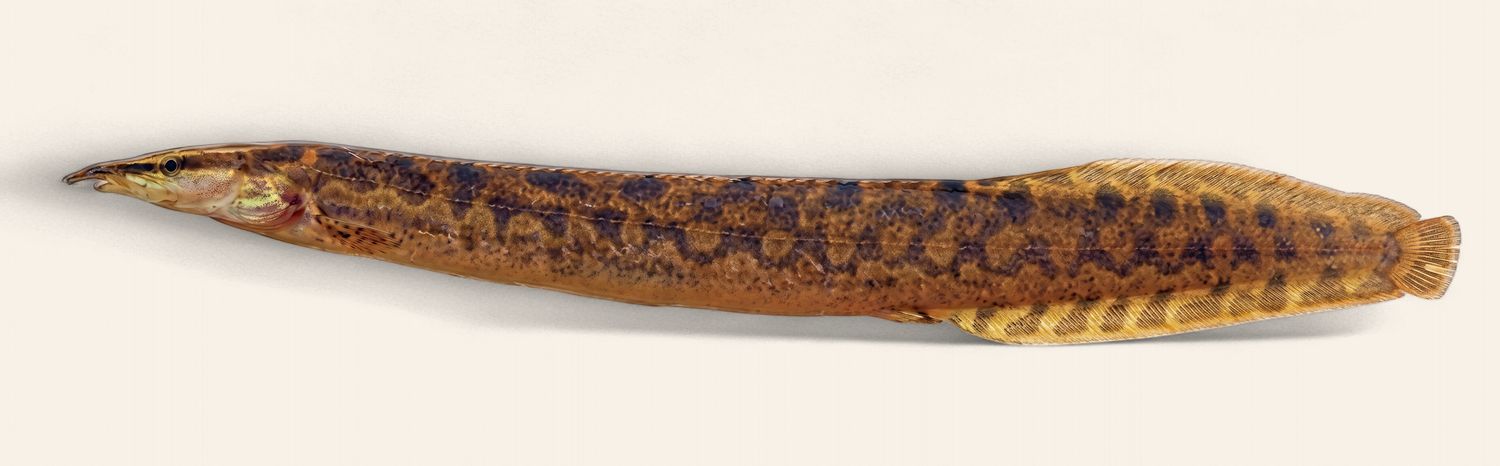
Tyre Track Eel
$89.99
Price incl. GST (15%) $11.74
Buy and save
Buy and earn $1.79 Loyalty for your next purchase
Loyalty is a discount program that lets you buy products and earn points to redeem on your next purchase. Your Loyalty balance is updated when you pay online or in-store. The Loyalty amount shown on this page can be recalculated at the checkout.
Size
Please choose
In stock: 1 available
1
Save this product for later
Tyre Track Eel
Product Details
Mastacembelus armatus is a popular species of freshwater spiny eel native to rivers and wetlands across South and Southeast Asia. Known commonly as the tire-track eel or zig-zag eel, this nocturnal predator is prized in both the aquarium hobby and local food fisheries for its unique speckled banding and peaceful demeanor.
Natural Habitat and Characteristics
These spiny eels thrive in slow-flowing highland streams, lowland wetlands, and flooded forests with sandy, pebbly, or muddy bottoms where they can easily burrow.
Size
- Wild Size: Can grow up to 1 meter (39 inches).
- Captive Size: Rarely exceeds 60 cm (24 inches).
Behavior
- Activity: Benthic (bottom-dwelling) and nocturnal.
- Diet: Typically forages at night for small fish, crustaceans, and insect larvae.
Care Requirements
Tank Size
- Requires a large tank, starting around 125 gallons or more to accommodate their mature size.
Substrate & Decoration
- Substrate: Smooth, fine sand or soft gravel is necessary because they love to burrow, often leaving only their snouts exposed.
- Decoration: Provide ample hiding spots using PVC pipes, smooth rocks, and driftwood.
Water Parameters
- pH: 6.0 to 7.5.
- Temperature: 22°C to 28°C (72°F to 82°F).
- Water Hardness: Adaptable.
Tank Mates
- Can be kept with other peaceful, larger fish, but anything small enough to fit in their mouth will be considered food.
Security
- Spiny eels are notorious escape artists. The aquarium must be fitted with a tightly secured lid, as they can easily squeeze through the smallest gaps.
Feeding
In the wild, their diet consists primarily of annelids, aquatic insects, crustaceans, and some plant material. In captivity, you should emulate this carnivorous diet by offering a variety of live or frozen foods, such as bloodworms, brine shrimp, and earthworms.
Photo:
By Trougnouf (talk) - Author, CC BY-SA 3.0, https://commons.wikimedia.org/w/index.php?curid=99257698
Display prices in:NZD