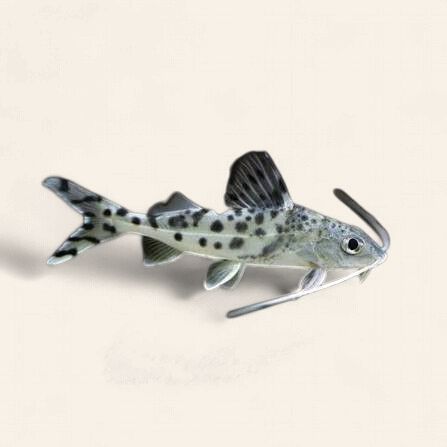
Pictus Catfish
$75.99
Price incl. GST (15%) $9.91
Buy and save
Buy and earn $1.51 Loyalty for your next purchase
Loyalty is a discount program that lets you buy products and earn points to redeem on your next purchase. Your Loyalty balance is updated when you pay online or in-store. The Loyalty amount shown on this page can be recalculated at the checkout.
In stock: 1 available
1
Save this product for later
Pictus Catfish
Product Details
The Pictus Catfish (Pimelodus pictus) is a highly active, silver fish covered in bold black spots, celebrated for its long "antenna" whiskers. Reaching 4 to 5 inches, these energetic bottom-dwellers require at least a 50-gallon tank, pristine water, and should be kept in schools of four or more.
Key Species Facts
Origin:
Amazon and Orinoco River basins in South America.
Lifespan:
5 to 10 years with proper care.
Temperament:
Generally peaceful, but they are opportunistic predators that will eat any fish small enough to fit in their mouths (like tiny tetras or guppies).
Tank Requirements
Tank Size:
A minimum of 50 to 55 gallons is required due to their high activity levels and schooling behavior.
Water Parameters:
- Temperature: 23°C to 27°C (73°F–80°F)
- pH Level: 6.5 to 7.5
- Water Hardness: Soft-to-moderately hard water
Habitat Setup:
- Lighting: Dim lighting
- Substrate: Soft sand to protect their sensitive barbels
- Decor: Provide hiding spots such as driftwood and smooth rocks
- Swimming Space: Ensure plenty of open areas for their active nature
Diet and Feeding
Pictus Catfish are omnivorous, opportunistic scavengers. While they eagerly eat leftover flakes that fall to the bottom, their diet should be supplemented with:
- High-quality sinking catfish pellets
- Live or frozen foods like bloodworms
Important Care Notes
- No Scales: As scaleless fish, they are highly sensitive to poor water quality and certain aquarium medications (e.g., ich treatments).
Handling:
- They possess sharp, serrated pectoral and dorsal fin spines that can deliver a mildly venomous sting.
- Avoid nets to prevent injury from tangled spines; instead, use a glass container or plastic bag for handling.
Display prices in:NZD