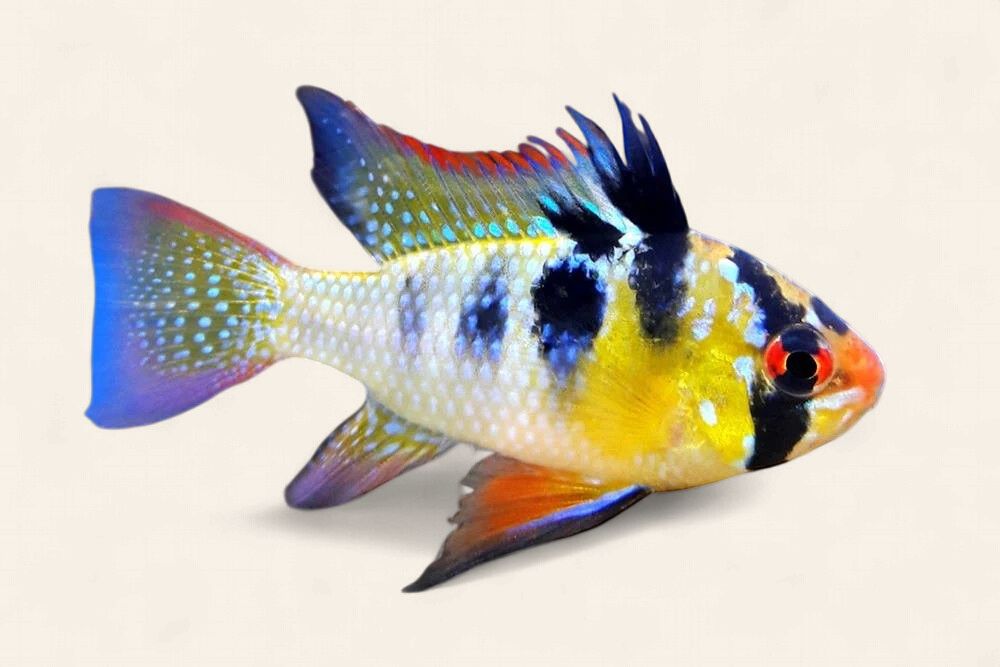
Pap Ram (Papillochromis)
Share
$29.99
Price incl. GST (15%) $3.91
Buy and save
Buy and earn $0.59 Loyalty for your next purchase
Loyalty is a discount program that lets you buy products and earn points to redeem on your next purchase. Your Loyalty balance is updated when you pay online or in-store. The Loyalty amount shown on this page can be recalculated at the checkout.
In stock: 4 available
1
Pap Ram (Papillochromis)
Share
Delivery information
Pickup: today, 11:10 AM–05:30 PM
Product details
The "Pap Ram" (often branded as a PAP strain Blue Ram) is a selectively bred, color-enhanced variant of the classic Ram Cichlid (Mikrogeophagus ramirezi, formerly Papiliochromis or Apistogramma ramirezi). This peaceful, highly vibrant dwarf cichlid requires warm, pristine water, spotlessly clean conditions, and a heavily planted aquarium to truly thrive.
Key Overview
Scientific Name: Mikrogeophagus ramirezi
Size & Lifespan:
- Size: 5–7 cm (2–3 inches)
- Lifespan: Typically lives 2–4 years with proper care
Temperament:
- Generally peaceful for a cichlid but can become semi-territorial during breeding.
- Best kept in pairs or alongside other peaceful community fish like tetras.
Ideal Tank Conditions
Temperature:
- 26–30°C (80–86°F)
- Rams are native to warm, slow-moving savanna waters and require an aquarium heater.
Water Parameters:
- Prefers soft, acidic water with a pH of 6.0–7.5.
Environment:
- Thrive in heavily planted tanks with fine, sandy substrate, driftwood, and rock caves to mimic their natural habitat.
Maintenance:
- Highly sensitive to ammonia and nitrite spikes.
- Regular, partial water changes are essential to keep water quality pristine.
Diet
Type:
- Omnivores
- Will accept high-quality flakes and nano-pellets but thrive best with protein-rich supplements like frozen or live brine shrimp and bloodworms.
Breeding
Behavior:
- Substrate spawners that will lay eggs on flat rocks, large leaves, or depressions they dig in the sand.
- Both parents typically fan and guard the eggs, though captive-bred strains can be prone to eating their first few clutches.
Display prices in:NZD