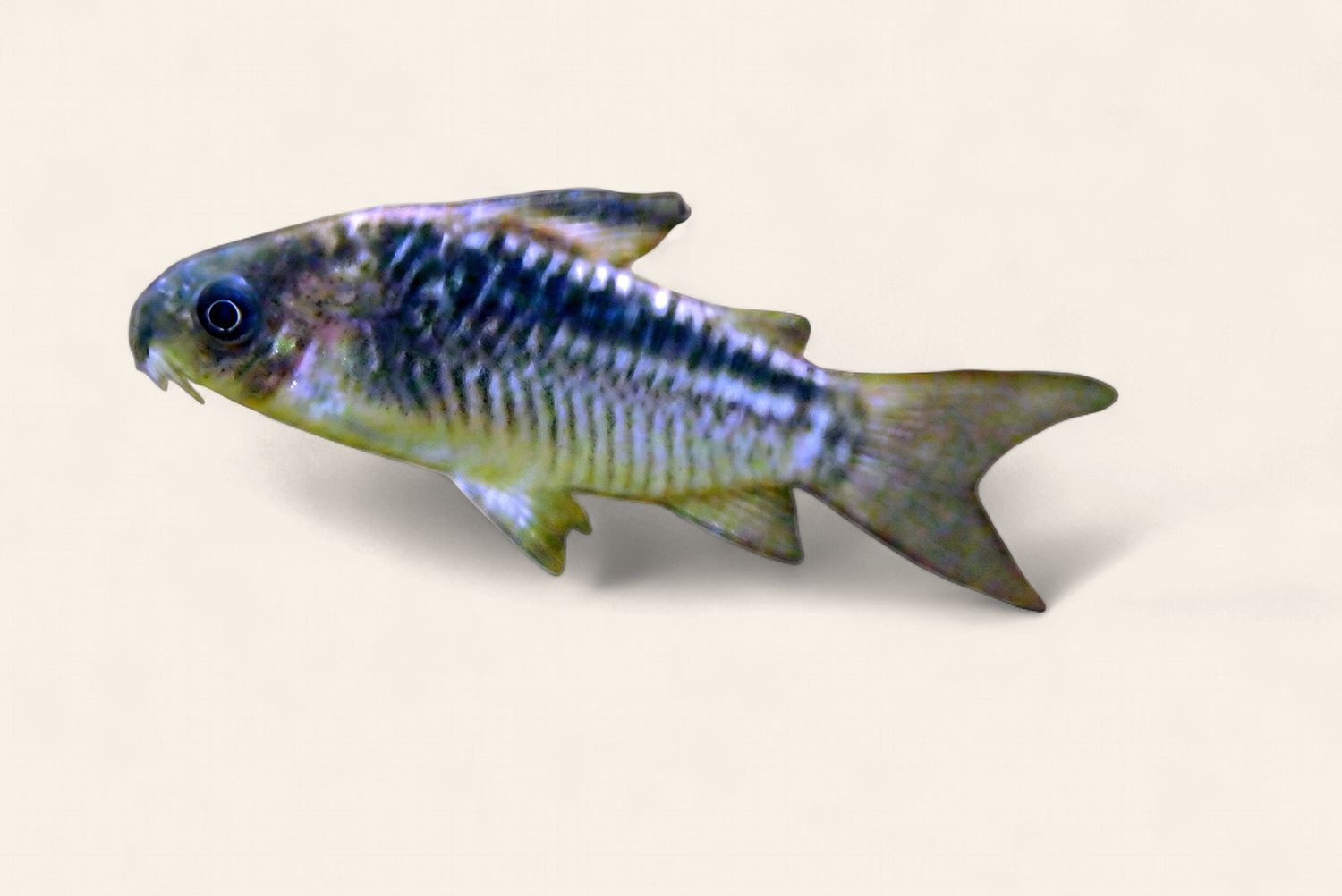
Elegans Cory
$35.99
Price incl. GST (15%) $4.69
Buy and save
Buy and earn $0.71 Loyalty for your next purchase
Loyalty is a discount program that lets you buy products and earn points to redeem on your next purchase. Your Loyalty balance is updated when you pay online or in-store. The Loyalty amount shown on this page can be recalculated at the checkout.
In stock: 4 available
1
Save this product for later
Elegans Cory
Product Details
The Elegant Corydoras (scientifically known as Gastrodermus elegans, formerly Corydoras elegans) is a small, peaceful South American catfish. Reaching just 4 to 5 cm in adulthood, these shoaling fish are prized for their playful schooling behavior, distinct mottled-stripe pattern, and low-maintenance care in community aquariums.
Profile & Appearance
- Origin: Upper Amazon River basin (Brazil, Colombia, and Peru).
- Size: 4 to 5 cm (~2 inches).
- Sexual Dimorphism:
- Males develop bolder, more contrasting black and reticulated markings and a taller dorsal fin.
- Females are generally larger and visibly rounder when viewed from above.
- Behavior: Highly social shoaling fish. While they spend time foraging along the bottom, they are more active in the mid-water column than many other corydoras.
Aquarium Care Requirements
Tank Size:
A minimum of 45-60 L (10 to 15 gallons) is required. They must be kept in schools of at least 6 individuals to thrive.
Water Parameters:
- Temperature: 22°C to 26°C (72°F to 79°F).
- pH: 6.0 to 7.5.
- Hardness: Soft to moderately hard water (2 to 12 dH).
Substrate:
Must be kept on fine, smooth sand or soft, rounded gravel. Their short, rounded noses and delicate barbels are highly sensitive to rough or sharp substrates.
Diet:
Omnivorous. They require high-quality sinking pellets and wafers and readily accept live or frozen foods such as daphnia, brine shrimp, and bloodworms.
Breeding
These fish have been bred in the home aquarium. Conditioning a group with a rich, live diet and performing large, slightly cooler water changes can trigger spawning. Females typically deposit small, adhesive eggs on the undersides of cleaned plant leaves or the aquarium glass.
Display prices in:NZD